१In one picture
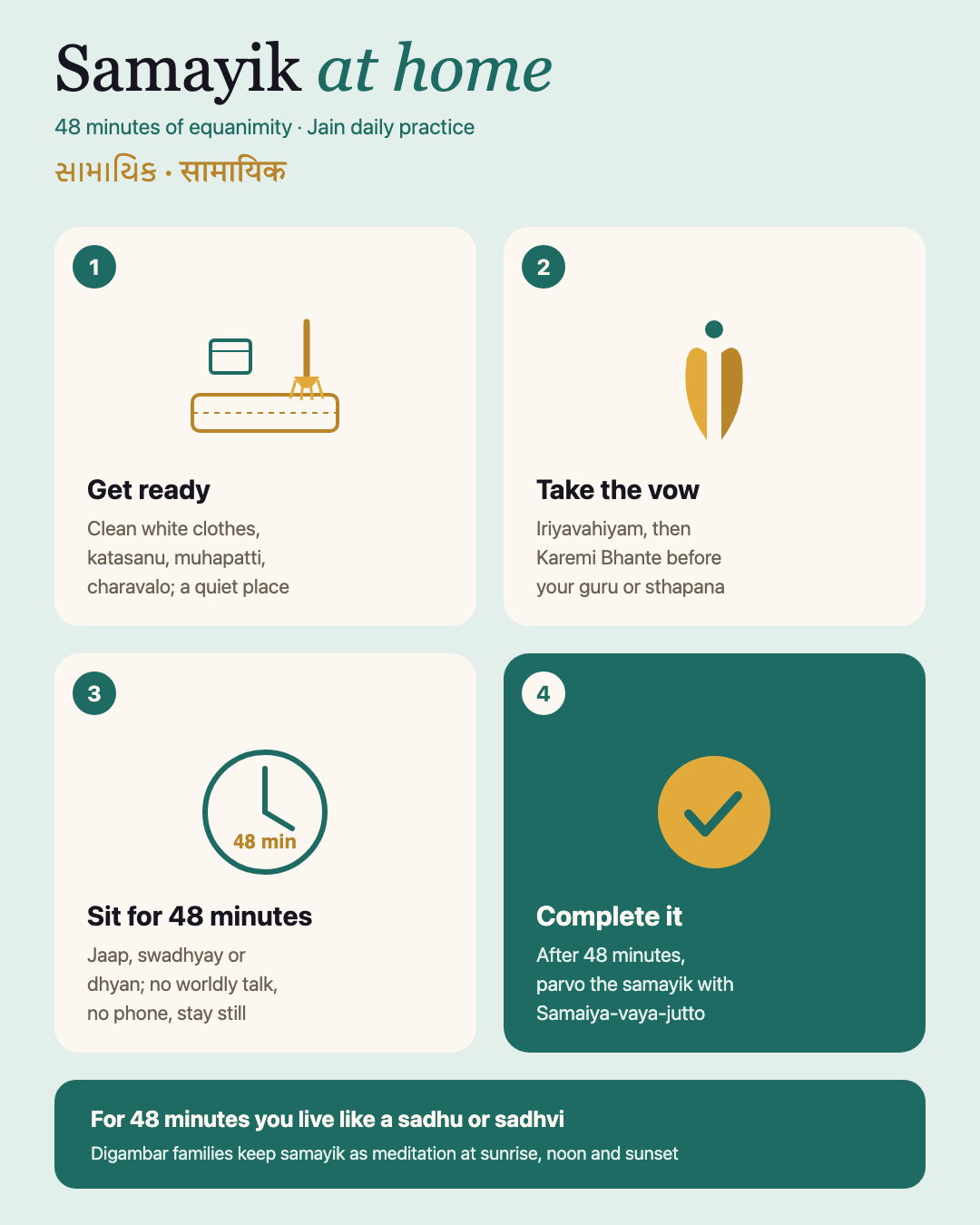
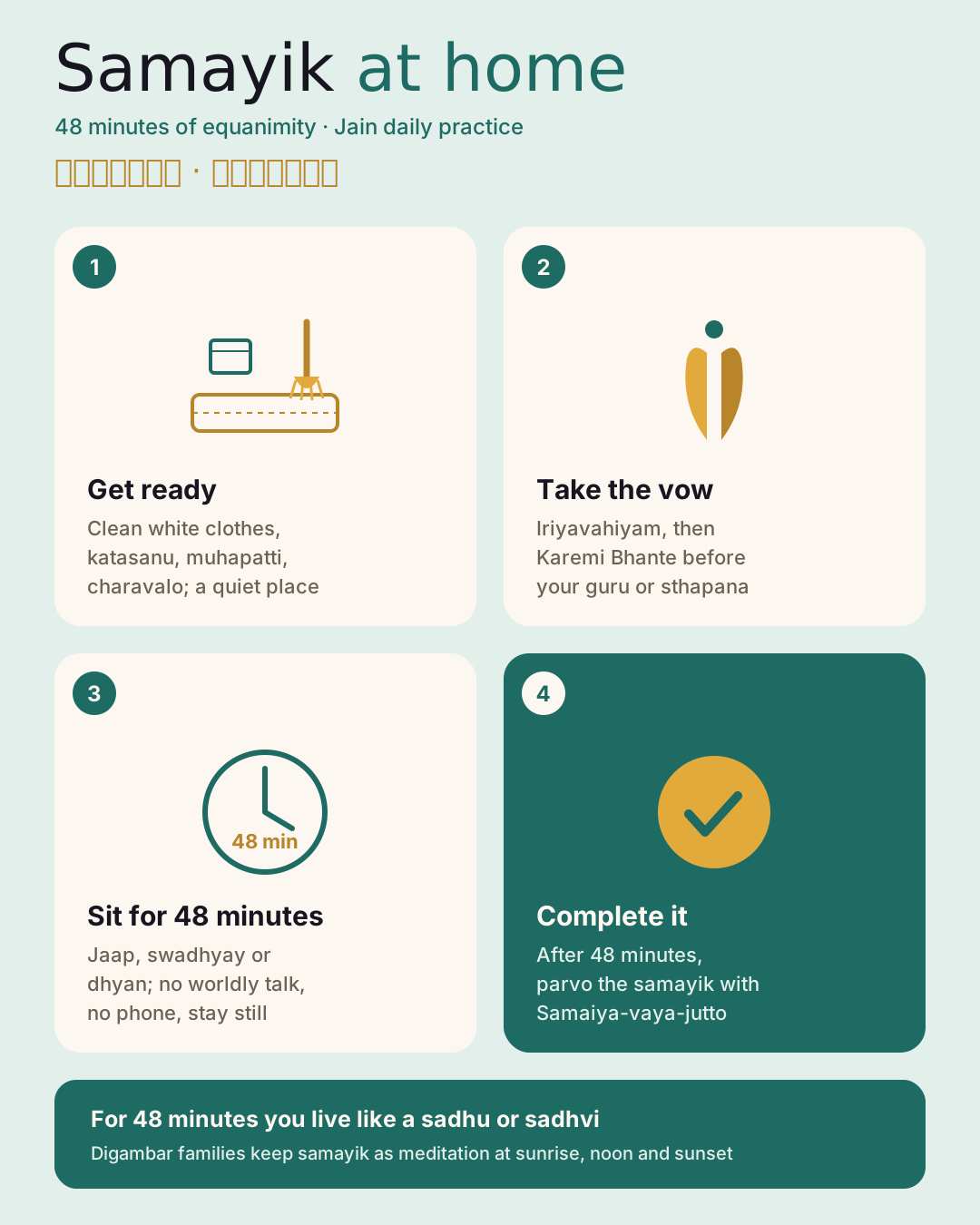
Samayik is two ghadi, about 48 minutes, of sitting in equanimity (sambhav). For that time you give up worldly work and live like a sadhu or sadhvi. It is the second of the four shikshavrats of a shravak.
Download image Share on WhatsApp
२What you need
- Clean, simple clothesWhite or plain, not worn to eat or sleep in.
- KatasanuA small woollen asan to sit on.
- MuhapattiA cloth held before the mouth while speaking the sutras.
- CharavaloA soft woollen brush to gently clear the place before you sit or move, so no small being is hurt.
- Sthapanacharya or a sutra bookPlaced in front of you, if your guru is not present.
- Navkarwali and a bookFor jaap and swadhyay.
- A clockPlaced where you can see it, so you don't need your phone.
- 48 quiet minutesTell the family, so no one needs you until you finish.
Don't have all of these yet? Start with a clean asan and a quiet corner; ask at your derasar or upashray for the rest.
३Step by step
Prepare the place
Choose a quiet, clean corner. Gently clear the floor with the charavalo, spread the katasanu, and keep the sthapanacharya or sutra book in front of you. Put your phone away.
Iriyavahiyam
With a khamasaman, ask permission and recite Iriyavahiyam: asking forgiveness for any harm to living beings while moving. Then Tassa Uttari and Annattha, a kayotsarga (commonly one Logassa, or four Navkar), and Logassa aloud.
Take the samayik
Do the muhapatti padilehan as your guru taught, then take the vow with the Karemi Bhante sutra, before your guru or the sthapanacharya. Note the time: your 48 minutes start now.
करेमि भंते सामाइयं…The full sutra is in your pratikraman book. Learn it from your guru or pathshala.Sit for 48 minutes
Stay seated and still. Spend the time in Navkar jaap, swadhyay (reading or learning a sutra), or dhyan. No worldly talk, no business, no phone, no food or water.
Complete the samayik
When 48 minutes are over, complete (parvo) the samayik with Iriyavahiyam and the Samaiya-vaya-jutto sutra, asking forgiveness for any fault made during it.
Keep the feeling
Before you get up, choose one thing to carry into the day: a kind word, patience, or a small vow. Many families do one samayik every day, and more on parvi tithis.
४What to avoid: the 32 faults
Commonly taught as 10 of the mind, 10 of speech and 12 of the body. In short:
Mind
Doing samayik for praise, out of fear, or wanting a reward; letting the mind wander to business or worry; doubt or impatience about the time.
Speech
Worldly talk, harsh or careless words, gossip, giving orders, or speaking the sutras too fast to understand.
Body
Shifting seat again and again, leaning or lying down, sleeping, looking around, or moving without clearing the place first.
५Questions people ask
Why 48 minutes?
Samayik is taken for two ghadi (one muhurt), about 48 minutes: long enough to settle the mind, short enough to keep every day.
When is the best time?
Any time you can be undisturbed. Many do it in the morning; some do it at noon or in the evening, or with pratikraman. Digambar tradition keeps samayik at sunrise, noon and sunset.
Can I do samayik at home, without a guru?
Yes. Keep the sthapanacharya, or a sutra book, in front of you and take the vow before it. If you can, learn the sutras once from a guru or pathshala teacher.
Can I do more than one?
Yes. Many people do two or three in a row, especially on parvi tithis and during Paryushan.
I don't know the sutras yet. What can I do?
Start with 48 minutes of quiet Navkar jaap and reading, with no phone and no worldly talk. Learn Iriyavahiyam and Karemi Bhante step by step.
Can children do samayik?
Yes. Children often start with a shorter quiet sitting with Navkar jaap and stories, and then move to a full samayik.
Another question? Ask Sahayak, our AI helper, or ask on WhatsApp. See also: Navkar Mantra jaap · Jain Today for your city
६Sources
- Samayik as the second shikshavrat, about 48 minutes, one to three times a day: Sāmāyika ↗ (Wikipedia, citing Jaini, Dundas and Champat Rai Jain)
- Muhapatti and its use: Muhpatti ↗ (Wikipedia)
- Samayik within the daily avashyaks: Pratikramana ↗ (Wikipedia)
- Sutra texts (Karemi Bhante, Iriyavahiyam, Samaiya-vaya-jutto): Jain eLibrary ↗ · JAINA Education ↗
- Read the sources in our Granth library.
 Samayik